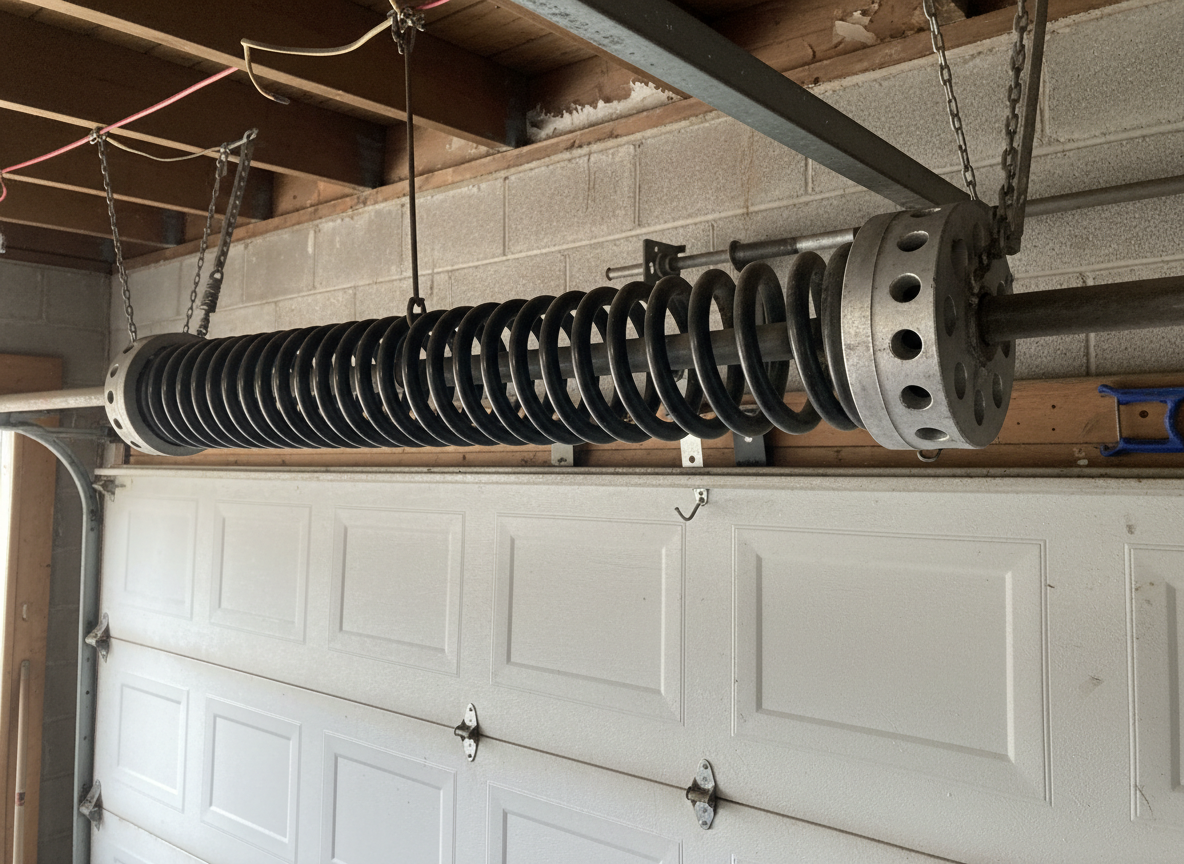
Garage doors use either torsion springs, mounted on a bar above the door, or extension springs, which run along each side of the door. Either type does the lifting. The opener mostly guides the door while the springs carry its weight. When a spring breaks, the door becomes very heavy and the opener may strain, hum or do nothing at all.
Common signs of a broken spring include a loud bang from the garage, a visible gap in the coil of a spring, a door that lifts only a few inches before stopping, a door that feels extremely heavy when released from the opener, and a door that drops or slams when lowered. Springs also wear out over time, so a door that looks uneven or sounds strained can be showing early signs.
Do not try to adjust, unwind or replace a spring yourself. A spring under tension can release suddenly. Winding a torsion spring takes the right tools and training, and a slip can cause serious injury. Do not touch the cables or the brackets near the spring either. Keep the door closed, stop using the opener and call.
When you talk to the provider, describe the sound you heard, what the door does now and whether the door has one spring or two. Ask whether the second spring should be replaced at the same time and what is suited to the weight of your door. Those questions help you compare answers from different providers.
The guide on what to do when a garage door spring breaks lists the steps in order. When you are ready to call, your call is connected to an independent local service provider that sets its own price and schedule. Ask for the price before work starts.
How it works
- 1
Stop using the door
Do not press the remote or wall button again. Running the opener against a broken spring can strain it.
- 2
Look from a safe distance
Note whether the spring above the door has a gap, and keep your hands away from it.
- 3
Call and describe it
Share what you heard and saw, ask for the price before work starts and ask what the visit includes.